If you own a swimming pool, you probably know about pH and chlorine. But there is a silent hero in your water chemistry that rarely gets the spotlight it deserves: Cyanuric Acid (CYA).
Often called “stabilizer” or “conditioner,” CYA acts as a sunblock for your pool. Without it, keeping your water clear and safe is nearly impossible—and incredibly expensive.
Here is exactly why Cyanuric Acid levels matter, how it protects your pool, and how to keep it perfectly balanced.
The Ultimate Chlorine ShieldChlorine is excellent at killing bacteria and algae, but it has a major weakness: ultraviolet (UV) light from the sun.
- The Vulnerability: On a bright sunny day, UV rays can destroy up to 90% of your pool’s free chlorine in less than two hours.
- The CYA Solution: Cyanuric acid binds weakly with free chlorine. It shields the chlorine molecules from sunlight, preventing them from breaking down.
- The Result: When bacteria or algae enter the water, CYA releases the chlorine so it can sanitize your pool.
Without CYA, you would have to dump chlorine into your pool every few hours just to keep it clean.
Saving Your Wallet
Because CYA stops chlorine from evaporating under the sun, it directly impacts your wallet.
- Lower Chemical Demands: Stable chlorine means you buy, store, and add fewer chemicals.
- Reduced Pump Run Time: Balanced water stays cleaner longer, reducing the heavy filtration loads on your equipment.
Investing in a baseline level of CYA saves hundreds of dollars in wasted chlorine every swim season.
The Delicate Balance: Finding the Sweet Spot
While CYA is essential, pool chemistry is all about balance. Having too little is a problem, but having too much can trigger a different nightmare.
The ideal range for Cyanuric Acid is 30 to 50 parts per million (ppm). (For saltwater pools, a slightly higher range of 60 to 80 ppm is often recommended).
What Happens When CYA is Too Low?
- Chlorine vanishes almost instantly in the sun.
- Algae blooms can take over your pool within 24 hours.
- You will spend a fortune constantly adding shock and liquid chlorine.
What Happens When CYA is Too High? (Chlorine Lock)
- The Trapping Effect: When CYA exceeds 100 ppm, it binds too tightly to the chlorine.
- Ineffective Sanitation: The chlorine becomes trapped and cannot kill bacteria or algae, even if your test kit says you have plenty of chlorine.
- The Only Fix: Unlike other chemicals, CYA does not evaporate. The only way to lower it is to partially drain your pool and refill it with fresh water.
Pro-Tips for Managing Your CYA
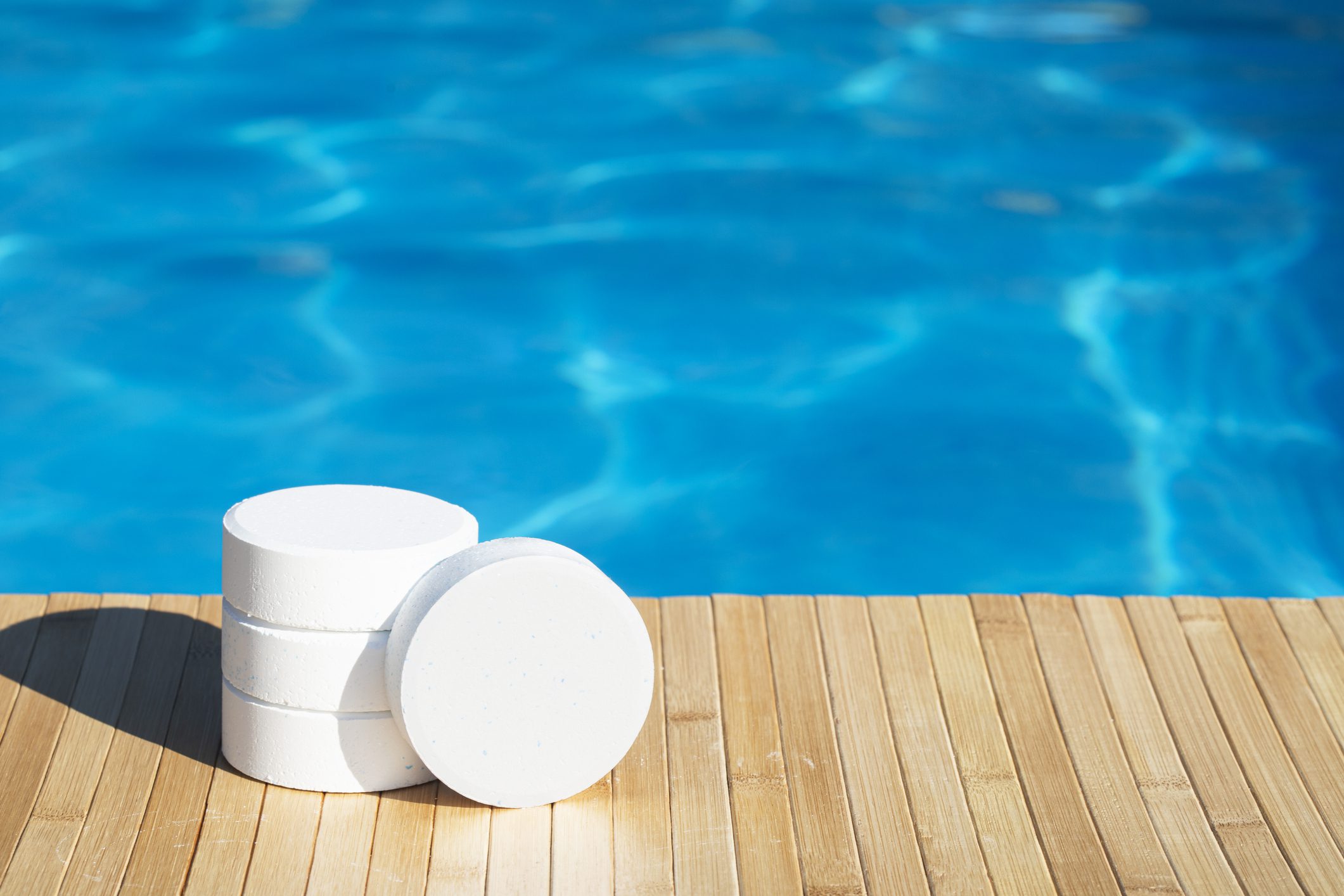
- Watch Your Chlorine Tabs: Trichlor pucks and Dichlor shock contain built-in CYA. If you use them continuously, your CYA levels will naturally creep up over time. Switch to liquid chlorine if your CYA is getting too high.
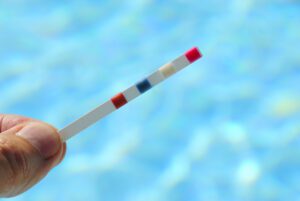
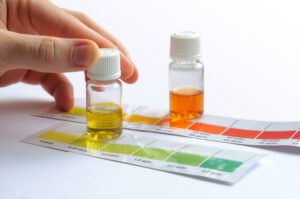
- Test Regularly: Test your CYA levels at least once a month, or every two weeks during peak summer.
- Be Patient When Adding: CYA takes several days to fully dissolve in water. After adding it through a skimmer sock, wait 5 to 7 days before re-testing the water so you don’t accidentally over-correct.
The Bottom Line
Think of Cyanuric Acid as insurance for your pool. Keep it in the golden zone of 30-50 ppm, and it will keep your chlorine working hard, your water sparkling clear, and your bank account happy.